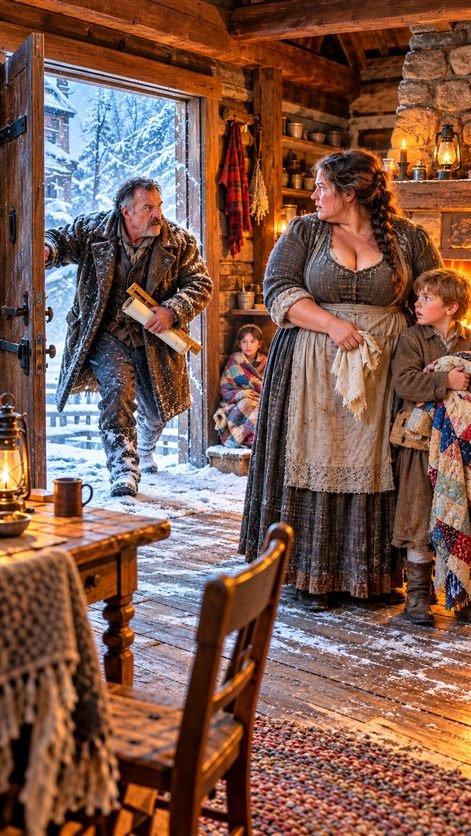
A bitter wind howled across the frozen prairie, shaking the frosted windowpane as Hester Wainwright pressed a final, heavy slate into the doorway of her unfinished fortress. She blocked the threshold with her body, her shoulders squared against the stinging sleet, keeping Councilman Curtis Barlow from stepping inside their home. You may tell me to stop, the young widow said, her voice dropping to a harsh whisper that cut through the whistling gale, but you will do it where my children cannot hear.
Councilman Curtis Barlow scowled, his breath pluming in the freezing air as he looked past her at the bizarre, thick stonework encircling the little cabin. Between the outer barrier of hand-chipped stone and the original wooden wall of the house stood a precise, unnerving gap, a narrow space barely wide enough for a grown person to slide a hand through. That empty void bothered him far more than the disorderly pile of rocks ever could, pricking at his sense of civic order and bureaucratic control. You cannot afford flour, yet you spend every spare hour building a second house around the first, he complained, shifting his heavy wool coat against the cold. Hester rested her work-worn, calloused fingers on the rough surface of the slate, feeling the deep chill sinking into her flesh. One house let the winter in, she answered flatly.
Inside the dim room behind her, eight-year-old Martin stood pressed against the frost-clouded glass, his little sister June huddled beside him in a patchwork quilt. Last February, during the worst of the deep freeze, they had slept wearing every single garment they owned while their mother stayed awake hour after hour, feeding precious, dwindling sticks into the sputtering stove just to keep them from freezing in their beds. Their father had passed away that spring, coughing his lungs out in the damp darkness of the very room they now occupied. Since then, the well-meaning townspeople offered Hester advice far more often than honest work or charity. Take a smaller, draftier room somewhere in the public settlement, they told her with patronizing nods, and let someone else decide what was best for the children. Instead, she ignored them, walking the frozen creek beds day after day to gather grey fieldstone and heavy slate.
But this was not a wall raised in blind hope or simple desperation. She tested each individual section with a thin strip of wool cloth held inside the hollow gap between the walls. When the cloth fluttered from stray drafts, she took the stones down with aching arms and began again, stacking them with painstaking precision. Martin helped her measure the clearance every afternoon after his chores were done. Another finger’s width here, mother? he asked one sunny afternoon when the thaw turned the mud to soup. Exactly, she replied, wiping sweat and grit from her forehead. He studied the shifting space, then looked past the fence toward the broad, imposing new winter refuge rising high upon the windy ridge. Did they leave a space like this up there, mother? Hester stopped working instantly, her hands freezing on the cold rock.
Months earlier, long before the ridge refuge was fully constructed, she had walked up the hill to ask the committee to see its construction plans. The council clerk had turned her away with a dismissive wave, telling her that building engineering was a matter for men who understood such things, not grieving widows with too much time on their hands. Yet the sheer scale and unusual exterior of that public building troubled her waking thoughts. She had sent a formal warning to the town council, detailing her calculations about thermal shifting and wind shear across the ridge. No one answered her letter, dismissing it as the rambling nonsense of an uneducated woman.
Now, every ranch family within twelve miles had been instructed by the council to gather at the massive ridge refuge if a severe winter storm struck the valley. It boasted a great iron stove, stacked provisions in the cellar, and thick stone walls that looked profoundly impressive from the main road. Hester’s isolated cabin had none of those grand advantages, no communal pantry, no iron stove, no reputation for safety. What it had was that narrow, calculated gap.