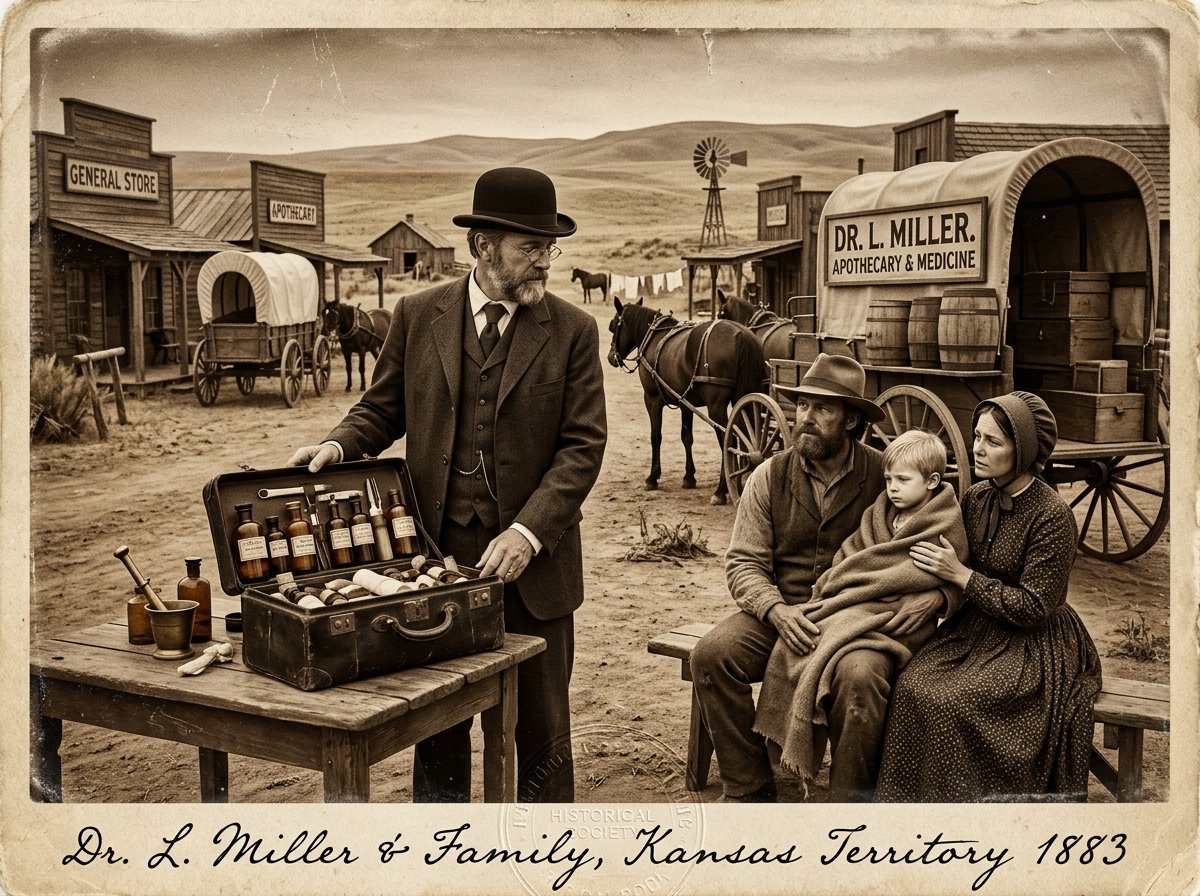
📜 Frontier Fast Facts: Pioneer Healthcare
Doctor Availability: Less than one trained physician per 2,000 square miles in rural territories.
Deadliest Threats: Cholera, typhoid fever, dysentery, childbed fever (puerperal sepsis).
Pioneer Pharmacopeia: Willow bark (natural salicin), pine sap, kerosene, boiled sage.
Key Figures: Frontier midwives (“granny women”) delivered over 80% of children born on the trail.
For settlers crossing the Great Plains in prairie schooners or homesteading isolated river cabins in the Dakotas, physical injury and disease were constant companions. The nearest medical practitioner was frequently fifty to one hundred miles away across impassable roads. In this severe frontier crucible, survival depended upon domestic pharmacopeia, traditional botanical lore, and the heroic resolve of pioneer women.
The Great Scourges: Cholera and Fevers
By far the greatest killers along the Oregon, California, and Santa Fe trails were not arrow wounds or wild animal attacks, but waterborne infections. Cholera, contracted from contaminated river crossings, struck with terrifying speed. A healthy immigrant eating breakfast at sunrise could succumb to violent dehydration and perish by nightfall. Graves along the Platte River became so numerous that subsequent wagon trains used them as mileage landmarks.
The Homestead Medicine Cabinet
Every pioneer mother carried a wooden recipe box packed with dried herbs, roots, and home remedies passed down through generations:
- Willow Bark Tea: Boiled inner bark of black willow contained salicin, a natural chemical cousin of modern acetylsalicylic acid (aspirin), used effectively to reduce burning fevers and relieve arthritic pain.
- Pine Sap and Lard Salves: Wounded limbs and axe cuts were treated with boiled spruce or pine gum mixed with mutton tallow, creating an airtight, naturally antiseptic barrier against dust and infection.
- Mustard Plasters: Ground black mustard seed mixed with flour and egg whites, spread between muslin cloths and applied to the chest, generated intense heat that broke up pulmonary congestion from prairie pneumonia.
- Turpentine and Kerosene: Used topically for everything from treating rattlesnake bites to repelling ticks and combating throat diphtheria.
The Frontier Midwives
The true medical heroes of the frontier were the unlicensed midwives — often called “granny women.” These experienced matriarchs rode side-saddle through blizzards and midnight thunderstorms to assist in child delivery in dirt-floor soddies. Using boiled water, carbolic soap, and clean linen, they maintained survival rates that often surpassed the septic, unwashed surgical wards of Eastern municipal hospitals of that era.
Patent Medicines and Alcohol Tonics
In mining camps and railroad terminals lacking professional pharmacies, patent medicine hawkers flourished. Bottles of “Kickapoo Indian Oil” or “Doctor Hostetter’s Celebrated Stomach Bitters” promised to cure everything from tuberculosis to liver colic. In truth, these patent medicines were typically sixty to eighty proof alcohol laced with liquid morphine, chloroform, or raw opium — dulling pain temporarily while leaving users physically dependent.
The Rise of Frontier Women Physicians
The demanding environment of the West also fostered trailblazing women doctors. Dr. Bethenia Owens-Adair, who crossed the Oregon Trail as a girl, endured extreme prejudice to graduate from medical school, becoming the first female surgeon west of the Rockies. In isolated towns, pioneer communities cared little for Victorian social dogmas; what mattered was whether a doctor could set a crushed femur or pull a fevered child through the winter thaw.
Historical Provenance & Archival Standards
Wild West Stories Historical Research Division • Primary Source Cross-Referenced
This historical monograph is compiled from digitized records preserved at the National Archives and Records Administration (NARA), the Library of Congress Prints and Photographs Division, and Western state historical registries. All dates, geographic coordinates, and legal proceedings have been verified against original 19th-century newspaper archives and territorial government registries.