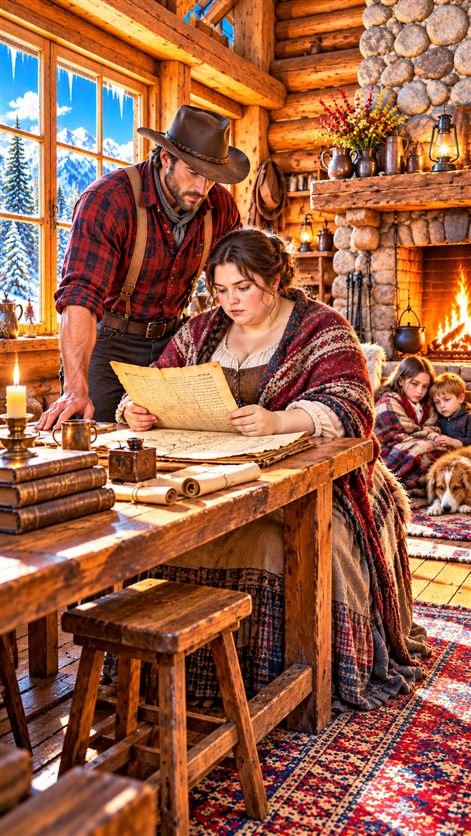
What the hero came looking for. What he discovered instead.
* * *
The freight wagon groaned beneath its canvas top like a dying spruce under winter load, its iron-shredded wheels grinding through the wet gray slush of the Bitterroot freight road. Abigail Albright pulled her patched wool shawl tighter across her collarbones, her frost-roughened fingers gripping the wooden bench as the mules heaved into another drift. Beside her, eight-year-old Lottie pressed her nose against the frosted slit of the canvas, her breath freezing instantly into delicate white ferns upon the cotton. Behind them, wedged among crates of dried beans and salt pork, ten-year-old Amos slept the heavy, exhausted sleep of children who had eaten only parched corn for three days. The timberline above them was swallowed entirely by low, bruised storm clouds rolling off the Idaho crags, dropping sleet that stung the cheekbones like thrown sand. When the wagon lurched to a halt with a screech of ungreased axles before the sagging gatepost of their cabin clearing, Abigail did not wait for the teamster to climb down from his box. She tossed back the canvas flap, dropped her boots into the half-frozen muck, and stared at the red-painted foreclosure sign nailed squarely across her rough-hewn oak door.
“This here’s the place, missus,” the teamster rasped, pulling his greasy wool cap lower against the squall. “Hargrove’s men posted that notice Tuesday past. Said the back-taxes on the timber claim lapsed while you were down in Boise trying to collect your scrivener wages.”
Abigail ignored him, her bad leg—stiffened from an old winter timber-slip three years back—dragging slightly as she crossed the frozen ruts. The ink on the posted notice was fresh, written in the unmistakable copperplate flourish of the county registrar’s clerk, yet beneath the official seal, the wood was scarred with the distinct slash of an axe. She reached out, her fingers—marred by years of acid-stains and lye-wash—tracing the grain of the larch timber where her father had notched his initials before the winter he died. Behind her, Asa Quaid stepped out from the shelter of the unbanked woodshed, leading a lathered bay gelding by a frayed lead rope. Asa did not wear a coat, only a thick flannel shirt darkened by sweat and wet pine needles, his shoulders broad and notched against the wind like a felled cedar. He looked from the foreclosure sign to Abigail’s face, his gray eyes narrowing beneath the brim of a beaver-felt hat that had seen ten winters of mountain weather.
“You’ve got no business unlatching that gate, Abigail,” Asa said, his voice a low, gravelly baritone that carried easily over the whine of the wind through the lodgepole pines. “Hargrove’s got a bailiff coming up from the valley come Monday with a sheriff’s writ and three hired gunmen to clear the timber.”
“Let them come with a regiment,” Abigail said, her chin lifting with a quiet, stubborn defiance that had kept her feeding three mouths on surveyor’s wages and copying fees while the town council whispered behind their hands. “My father paid the patent on this quarter-section in eighteen-sixty-two, and no man with an ink-pot and a bribe is going to scratch my name off the roll while I have breath in my lungs.”
She walked past him, her boots crunching on the frozen thistle-heads, and lifted the heavy iron latch of the cabin door. It gave way with a dry pop of frost-sealed jambs. Inside, the air smelled of stale woodsmoke, damp wool, and the bitter copper tang of old blood. On the plank floor near the stone hearth lay Micah, the old mountain guide they had taken in after his team went over an embankment in November, his right leg trapped grotesquely beneath a heavy iron-jawed beaver trap that had slipped from the drying rack. His gray beard was matted with sweat, and his lips were cracked blue from fever and agony. Lottie and Amos slipped past Abigail’s skirts into the dim warmth of the room, crying out softly when they saw the old man shivering beneath a moth-eaten buffalo robe.
“He tried to check the trap line before the storm broke,” Asa muttered, dropping his hat on the rough table and stepping instantly to the hearth. “The spring-jaw caught him when the frozen larch log rolled. I found him two hours back, half-buried in drift-snow.”
“Bring the kettle and the tallow,” Abigail commanded, her voice dropping instantly into the cool, measured cadence she used when balancing the county commissioners’ freight ledgers. There was no tremor in her hands now, despite the deep-seated ache in her joints. She knelt beside the old man, ignoring the mud soaking through her woolen skirt. “Asa, take the iron crowbar from the wood-box. We have to spring that jaw before gangrene sets into the shin bone.”
* * *
The cabin grew stifling with the heat of pine-knot fire and the sharp, resinous reek of Bitterroot balsam root resin that Abigail smeared across Micah’s swollen skin. With the heavy green-pole lever jammed expertly between the jagged iron teeth of the trap, Asa braced his boots against the floor joists, his thick muscles bunching beneath his flannel shirt until the seams strained.
“Now, Abigail—when I give the heave, pull his ankle clear before the dog slips,” Asa muttered, his breath coming in hot, rhythmic puffs that frosted the grease-paper window panes.
“I have it,” she murmured. Her fingers, scarred and calloused from holding the quill for ten-hour stretches over court ledgers, locked firmly around Micah’s heel. “Heave, Asa.”
The iron jaws groaned, the rusted spring crying out against the wood-smoke-darkened rafters as Asa bore down with the lever. With a dull, wet snap, the trap sprang wide. Abigail jerked the old man’s leg free just as the iron teeth slammed shut again on an empty rag. Micah let out a long, shuddering groan that rattled in his chest, his eyes rolling back before settling into a deep, exhausted sleep. Without a word, Abigail reached for the strip of boiled white linen she had been soaking in chamomile tea, wrapping the torn flesh with swift, professional precision while Lottie held the tallow candle steady. Asa watched her from across the low cot, his hands resting on his knees—hands scarred by plow handles and skinning knives—and for a long moment the small, dim room seemed to narrow until there was only the hiss of green larch wood in the hearth and the sound of each other’s breathing.
“You didn’t learn that bandaging copying deeds in the county clerk’s office,” Asa said quietly, his eyes searching her face with a heavy, watchful curiosity.
“My mother was the camp nurse at the Elk City mines before the typhus took her,” Abigail replied without looking up, her fingers tying off the linen knot with a neat, square tug. “And I spent two years binding loggers’ limbs when the timber sleds ran over them in seventy-four. People in the Bitterroot don’t pay much for a woman who can write a copperplate hand unless they need their land titles doctored or their dead buried without fuss.”
“Hargrove doesn’t want your timber for firewood,” Asa said, standing up and tossing a fresh split of pine onto the coals. Sparks showered upward against the soot-blackened chimney stones. “He wants the high-basin water rights. With the new stamp mill going in at the forks, whoever controls the Bitterroot creek-head controls every placer claim for twenty miles down-valley. That foreclosure notice isn’t just about back-taxes. It’s a forged hand. I saw the registrar’s ledger down at the settlement last month; your father’s name was crossed out with modern iron-gall ink over an 1868 entry.”
Abigail froze, her hand resting flat over the edge of the wooden table where her ink-stained whalebone ruler lay beside a sheaf of tally papers. Her breath caught, her eyes narrowing as she connected the missing land registry folio with the peculiar smell of coal-oil that had hung around Hargrove’s saddle-bags when he rode past their fence last Tuesday.
“Iron-gall ink,” she whispered, her voice barely audible over the wind against the shingles. “The county office didn’t stock iron-gall until the spring of seventy-six. If the patent entry from sixty-two is written in seventy-six ink, the whole document is a fabricated lie.”
“Which is why Hargrove’s men are watching the trail,” Asa said, stepping closer until his shoulder nearly brushed the low pine beam of the ceiling. He reached out, his heavy, work-roughened thumb gently brushing a smudge of dried soot from Abigail’s temple—a motion so unconsciously tender that she stopped breathing entirely. “They aren’t just waiting for the eviction date. They’re waiting for you to leave so they can burn the cabin and clear the title with smoke and ash.”
* * *
The storm cleared by midnight, leaving the Idaho peaks glittering under a hard, merciless moon that turned the pine forests to silver and blue-black shadow. At first light, Abigail laced her knee-high moccasins, pulled her wolf-skin cap over her ears, and took her ash-wood snowshoes down from the pegs by the door. Micah was resting easier, breathing through his nose with the steady rattle of a recovering man, while Lottie tended the simmering pot of buckwheat mush over the embers.