📜 Frontier Fast Facts: The Transcontinental Railroad
Historic Legislation: Pacific Railway Act of July 1, 1862 (Signed into law by President Abraham Lincoln).
The Great Route: 1,912 miles connecting Omaha, Nebraska, with Sacramento, California, traversing the Great Plains and the Sierra Nevada.
Summit Meeting: Promontory Summit, Utah Territory (May 10, 1869) marked by the driving of the Golden Spike.
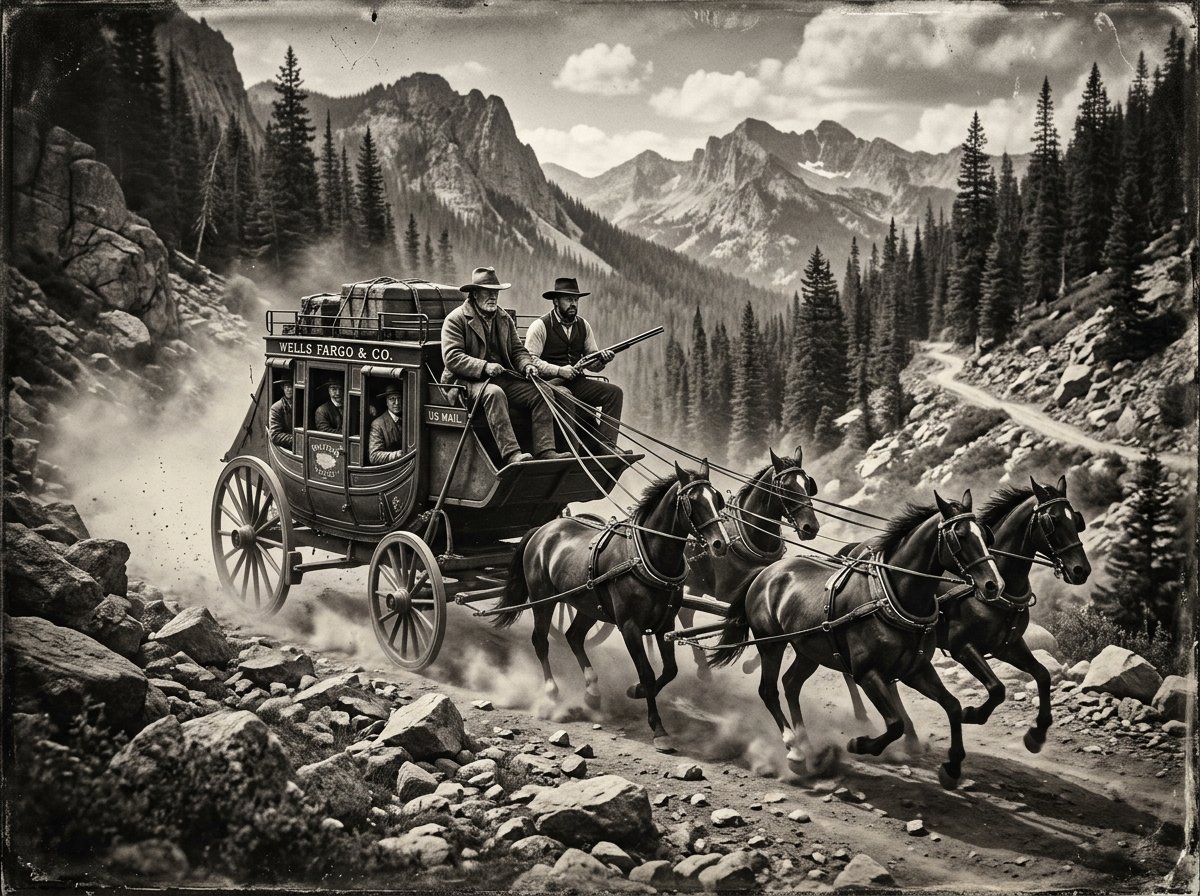
Continental Impact: Reduced coast-to-coast travel time from six grueling months by stagecoach or sea down to just seven days.
On May 10, 1869, telegraph wires across the United States transmitted a single four-letter word that set church bells ringing and cannons firing from New York to San Francisco: “DONE.” At Promontory Summit in Utah Territory, the iron rails of the Central Pacific and Union Pacific railroads were officially joined with a symbolic Golden Spike. The completion of the First Transcontinental Railroad conquered the vast geographical barriers of the Old West, transforming an isolated frontier of wagon trails into an interconnected continental powerhouse.
Lincoln’s Vision and the Pacific Railway Act of 1862
The dream of a transcontinental iron road had been debated in Congress for decades, stalled by fierce sectional rivalry between North and South over the proposed route. In 1862, in the very darkest days of the Civil War, President Abraham Lincoln signed the Pacific Railway Act. Lincoln recognized that binding the gold-rich territories of California and Nevada to the Union was vital to national survival and future economic stability.
The charter authorized two massive private corporations: the Central Pacific Railroad (CPRR), building eastward from Sacramento across the granite cliffs of the Sierra Nevada, and the Union Pacific Railroad (UPRR), building westward from Omaha across the rolling prairie of the Great Plains. The federal government subsidized construction through a combination of 30-year government bonds and massive land grants flanking the tracks.
The Labor Miracle: Chinese and Irish Navvies
Building nearly 2,000 miles of track through uncharted wilderness required superhuman physical labor, cutting-edge civil engineering, and extraordinary human sacrifice.
- The Chinese Pioneers of the Central Pacific: Faced with crippling labor shortages in California, CPRR superintendent Charles Crocker took a daring gamble in 1865 by hiring Chinese immigrant laborers. Proving exceptionally industrious, temperate, and courageous, over 12,000 Chinese workers formed 90% of CPRR’s workforce. They carved roadbeds into sheer granite precipices at Cape Horn, hung in wicker baskets hundreds of feet above rushing river gorges to ignite black-powder charges, and hand-drilled the Summit Tunnel through 1,659 feet of solid rock amid 40-foot snowdrifts.
- Irish Navvies and Civil War Veterans of the Union Pacific: On the eastern front, the Union Pacific employed thousands of Irish immigrants, emancipated African Americans, and Union and Confederate veterans. Racing across Nebraska and Wyoming, track-laying crews worked with military precision, spiking two miles of rails a day under the constant threat of prairie blizzards, derailments, and hostile raiding parties.
The Legendary Race Across the Great Basin
Because government subsidies were awarded per mile of completed track, the two rival companies engaged in a cutthroat race across Utah and Nevada. Grading crews frequently surveyed duplicate roadbeds parallel to one another for hundreds of miles just to claim government bonds. The frantic competition culminated in the legendary “Ten Miles in One Day” feat on April 28, 1869, when Central Pacific crews laid 10 miles and 56 feet of track in a single 12-hour shift — a world record that has never been broken.
Promontory Summit & The Golden Spike (May 10, 1869)
The climactic ceremony at Promontory Summit brought together Central Pacific locomotive Jupiter and Union Pacific locomotive No. 119 cowcatcher-to-cowcatcher. CPRR president Leland Stanford tapped the final spike made of solid 17.6-karat California gold with a silver-headed maul wired directly to the telegraph system. Every blow reverberated instantly in Morse code to fire station alarms, ship bells, and street parades across the nation.
How the Iron Road Transformed the West
The completion of the railroad ushered in a dramatic, irreversible transformation of the American frontier:
- Collapse of Travel Times: Journeys that once claimed six months of perilous trekking along the Chisholm Trail or Oregon Trail could now be traversed in luxury and safety within seven days.
- Economic Boom & Boomtown Emergence: The railroad spawned iconic terminus towns overnight — Cheyenne, Laramie, Reno, and Promontory — fueling commercial cattle shipping and mining logistics.
- Demise of the Open Frontier: The locomotive brought millions of homesteaders, spelled the tragic doom of the great bison herds, and permanently confined nomadic Indigenous tribes to reservations.
Historical Provenance & Archival Standards
Wild West Stories Historical Research Division • Primary Source Cross-Referenced
This historical monograph is compiled from digitized records preserved at the National Archives and Records Administration (NARA), the Library of Congress Prints and Photographs Division, and Western state historical registries. All dates, geographic coordinates, and legal proceedings have been verified against original 19th-century newspaper archives and territorial government registries.