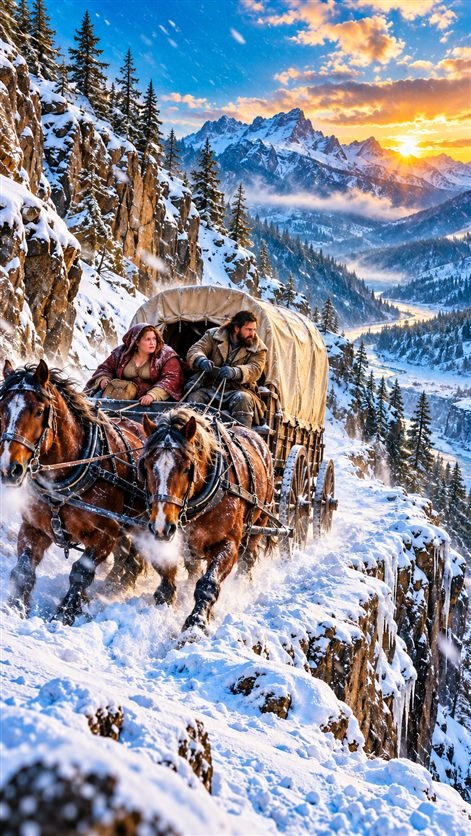
Abel pulled back on the reins, bringing the team to a halt. The horses blew twin plumes of white steam into the freezing mountain air. They were parked beneath an overhanging cliff that offered temporary shelter from the downpour. The darkness around them was absolute, broken only by the pale glow of the dashboard lantern flickering in the wind. Abel turned his massive frame toward her, his dark eyes searching hers with a intensity that made the chill in the air seem secondary.
What name were they using when you left Kansas City, Mara?
The one on the marriage license, she replied without blinking. Unless you’ve decided the ink is too expensive.
Abel stared at her for a long, silent moment. Then, slowly, a grim smile touched his lips. He reached into his heavy coat and pulled out a flask, unscrewing the cap with his teeth before offering it to her. Mara took it, smelled the harsh rye whiskey, and took a long, burning swallow that settled her nerves. She handed it back, wiping her mouth with the back of her blood-stained sleeve.
We have three miles of switchbacks left, Abel said, putting the flask away. The cabin isn’t much, but the roof doesn’t leak in the bedroom.
Just the bedroom?
The rest of the house builds character, he replied, snapping the reins.
They reached the cabin an hour later. It was a sprawling structure of dark pine and gray stone, hunkered against the side of the mountain like an extension of the earth itself. No lights burned in the windows. No smoke rose from the stone chimney. Abel jumped down from the wagon, unhooking the team with practiced efficiency while Mara gathered her bags and stepped down into the mud. She stood shivering in the dark, watching the heavy oak door of the cabin. Something felt wrong. The air didn’t smell of old dust and closed rooms; it smelled faintly of coal oil and fresh sweat.
Abel was already unlatching the heavy iron padlock on the front door. He pushed it open, the hinges groaning in the damp night air, and stepped inside with a lit lantern. Mara followed closely behind him, her carpetbag gripped tightly in her right hand. The interior was surprisingly spacious, dominated by a massive stone fireplace and heavy timber furniture. But the room was ice cold, and the small table near the kitchen alcove was set with two plates, two cups, and half-eaten pieces of bread that had gone hard at the edges.
Mara stopped by the table. She reached out and touched a crumb with the tip of her finger.
Expecting company? she asked softly.
Abel didn’t look back. He was busy lighting the tallow candles on the mantel, his broad back blocking the flickering light.
My brother’s friends occasionally pass through, he said, his voice flat. They aren’t particular about invitations.
Mara walked slowly toward the back of the room, her eyes adjusting to the dim shadows. A heavy woolen blanket hung over a doorway leading to the back quarters. Without asking, she reached out and pulled it aside. Inside the small room, a cot was pushed against the wall, and sitting on the edge of the cot was a man with a bandage wrapped tightly around his head and blood seeping through his shirt. He looked up, blinking against the lantern light, his eyes wide with a mixture of terror and fury.
It was the gentleman from the train.
Mara didn’t scream. She didn’t drop her bags. She simply let the heavy blanket fall back into place, turned slowly around, and looked across the room at Abel Stone. Abel was standing by the fireplace now, resting his large hands on the heavy mantelpiece. He wasn’t reaching for a gun. He was just watching her, waiting to see how long it would take for the pieces to connect.
He missed his stop in Mercy Hollow, Abel said quietly. So I waited for the next train to slow down near the trestle. I figured a man who puts his hands on a woman who knows how to use her knuckles deserved a proper mountain welcome.
Mara set her carpetbag down on the floor with a soft thud. She looked down at the dark streak of dried blood still visible on her brown sleeve, then back up at the man who had brought her three thousand miles to a desolate cabin on Wolfjaw Mountain.
You didn’t answer my advertisement, did you, Abel Stone? she asked, her voice dangerously low.
Abel shook his head slowly.
I don’t read the St. Louis paper, Mara. I wrote the notice myself, and paid the telegraph office in Denver to place it under a name I knew would draw someone stubborn enough to survive this place. I needed someone who wouldn’t ask too many questions about the things buried in the clearing out back.
And why me? Mara took a slow step toward him, the tension in the room snapping like dry pine in a fire. Out of all the names in all the papers between here and the coast, why send for a woman with a broken nose on her record and a warrant in three counties?
Abel pushed away from the mantelpiece and walked toward her, towering over her by a foot, yet stopping just far enough away to give her room to breathe.
Because when my brother died in the snow, he wasn’t running from the law, Mara. He was running from you.
The world seemed to tilt beneath Mara’s feet. The rain drumming against the shingled roof turned into a distant roar, and the shadows around the stone fireplace seemed to close in like prison walls. She stared up into Abel’s dark, unblinking eyes, searching for the resemblance she had missed in the fading light of the train station. The shape of the jaw. The dark, heavy beard. The stubborn set of the shoulders. He wasn’t the stranger who had placed an advertisement for a quiet wife. He was the shadow she had spent two years trying to outrun, standing in the very trap he had spent six months building for her.
You’re not Abel, she whispered, the realization hitting her with the force of a physical blow. You’re the other one. The one who stayed behind in the cabin while the money burned.
Abel reached out, his massive hand closing gently around her wrist, stopping her before she could reach for the satchel by the door. His grip was firm, inescapable, yet entirely devoid of malice.
My name is Caleb Stone, he said softly, the firelight catching the old scar across his cheek that he had kept hidden beneath his collar all evening. And you’re going to help me find out what your brother did with the rest of the gold, before the men on the train catch up to both of us.