📜 Frontier Fast Facts: Frontier Law & Marshals
Primary Federal Authority: United States Marshals Service (Established by the Judiciary Act of 1789, the sole federal law agency on territorial soil).
Jurisdiction Challenges: A single deputy marshal frequently oversaw a territory spanning over 70,000 square miles without telegraph or rail support.
Iconic Judicial Hub: Federal District Court for the Western District of Arkansas at Fort Smith, presided over by Judge Isaac C. Parker.
Vigilante Committees: Community-formed ad-hoc enforcement groups that arose in boomtowns when formal municipal law was absent or corrupt.
In the popular mythology of the American Old West, frontier towns were lawless cauldrons of endless midday shootouts, corrupt saloons, and trigger-happy outlaws. While the frontier undeniably attracted gamblers, road agents, cattle rustlers, and deserters, the historical reality of Western law enforcement was defined by an intricate, evolving struggle to establish legitimate legal institutions across millions of square miles of isolated wilderness. At the center of this titanic struggle stood the federal U.S. Marshals, county sheriffs, and the controversial rise of community vigilance committees.
The U.S. Marshals Service: Federal Guardians of the Territories
Before Western territories achieved statehood — including Arizona, New Mexico, Utah, Idaho, and Indian Territory (modern Oklahoma) — they fell under direct federal civil jurisdiction. The President appointed a single United States Marshal for each vast territory, who in turn commissioned a cadre of sworn Deputy U.S. Marshals to enforce federal statutes.
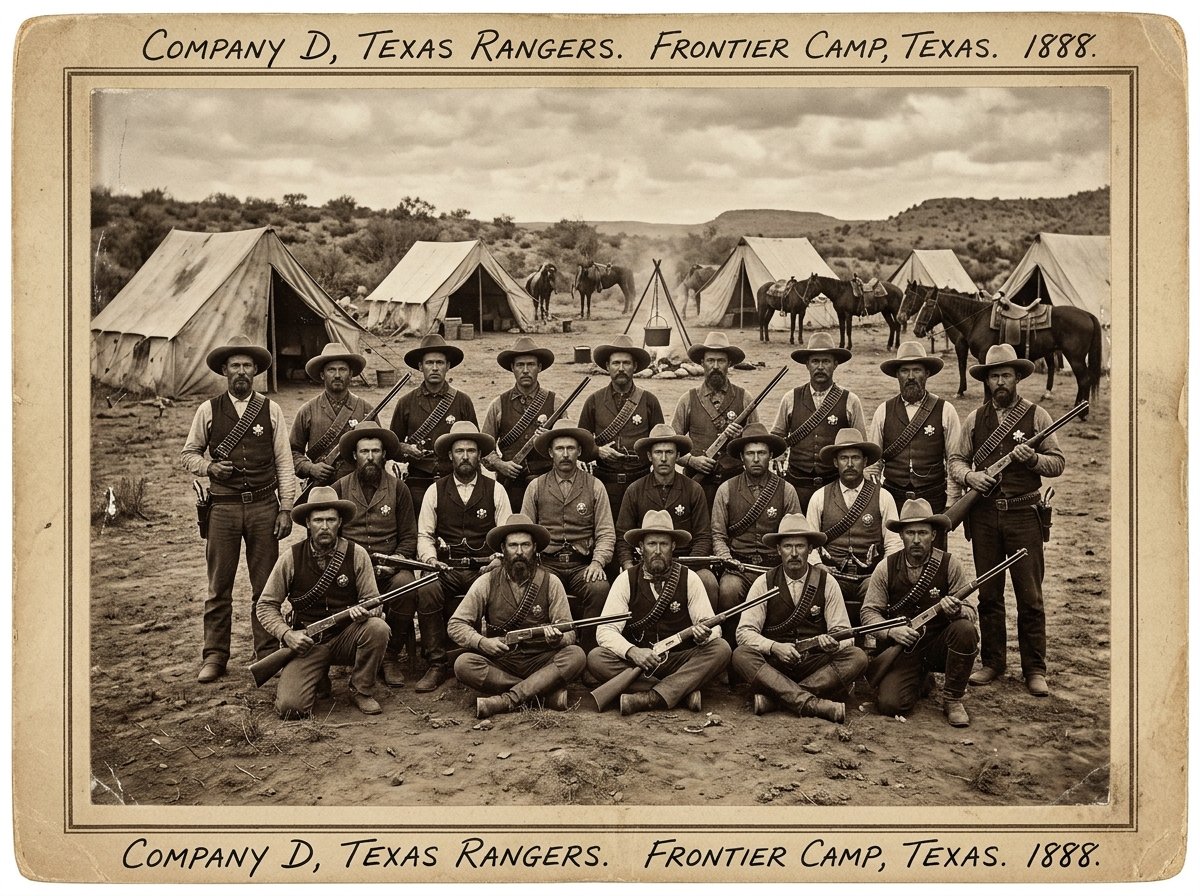
The operational reality of a frontier deputy marshal was perilous and lonely. Armed with a pocket watch, a Colt Single Action Army revolver, a Winchester carbine, and a stack of federal arrest warrants, a deputy spent weeks in the saddle traversing deserts and mountain ranges. They hunted counterfeiters, whiskey peddlers, timber thieves, stage robbers, and train bandits across territories larger than most European nations, often with no backup and only their wits to keep them alive.
Judge Isaac Parker: “The Hanging Judge” of Fort Smith
No legal institution in Western history captured the frontier imagination quite like the United States District Court for the Western District of Arkansas, based at Fort Smith. Presiding over this court from 1875 to 1896 was Judge Isaac Charles Parker.
Parker held exclusive jurisdiction over more than 74,000 square miles of Indian Territory, a refuge where thousands of outlaws fled from state warrants. Over his 21-year tenure, Judge Parker tried over 13,000 cases and sentenced 160 individuals to the gallows, of whom 79 were ultimately executed on Fort Smith’s massive communal scaffold. Despite sensationalized tabloid portrayals as a bloodthirsty magistrate, archival transcripts show Parker was a fair, scholarly, and deeply principled jurist who fought tirelessly for equal legal rights for Native Americans, championed educational reform, and sought to purge rampant violent crime from the territorial frontier.
To enforce his decrees, Parker relied on a corps of legendary deputy marshals, including the peerless Bass Reeves, Heck Thomas, and Frank Canton, who brought thousands of dangerous felons to trial with unyielding professional integrity.
Vigilance Committees: Frontier Justice vs. Mob Rule
Where formal legal institutions failed to keep pace with explosive mining strikes and boomtown populations, citizens frequently organized extra-legal law enforcement bodies known as Vigilance Committees (Vigilantes).
- The San Francisco Committee of 1851 and 1856: Overwhelmed by corrupt municipal officials and predatory criminal syndicates known as “The Hounds,” thousands of business leaders and merchants formed an armed civilian force that seized accused murderers, conducted summary trials, and hanged leaders from public warehouse gables.
- The Montana Vigilantes (1863–1864): In the gold camps of Bannack and Virginia City, a brutal outlaw syndicate known as the “Innocents” murdered over one hundred prospectors. Discovering that Bannack’s own elected sheriff, Henry Plummer, was the secret mastermind of the gang, citizens formed the Vigilantes, hunting down and hanging Plummer and twenty-one confederates along the frozen gulches.
While vigilance committees temporarily quelled rampant crime in anarchic boomtowns, their summary trials lacked basic constitutional protections, frequently devolving into score-settling, racial intimidation, and lynch-mob violence. Frontier leaders quickly recognized that sustainable peace demanded statutory courts, formal juries, and professional lawmen rather than midnight vigilante rope.
The Evolution from Frontier Badge to Modern Law
By the turn of the 20th century, the expansion of telegraph networks, transcontinental railroads, and territorial statehood permanently replaced the frontier posse with municipal police departments and modern county sheriff offices. The frontier marshals who rode thousands of miles across sagebrush wilderness to enforce the law did not just tame violent boomtowns — they established the enduring framework of American constitutional justice across the West.
Historical Provenance & Archival Standards
Wild West Stories Historical Research Division • Primary Source Cross-Referenced
This historical monograph is compiled from digitized records preserved at the National Archives and Records Administration (NARA), the Library of Congress Prints and Photographs Division, and Western state historical registries. All dates, geographic coordinates, and legal proceedings have been verified against original 19th-century newspaper archives and territorial government registries.