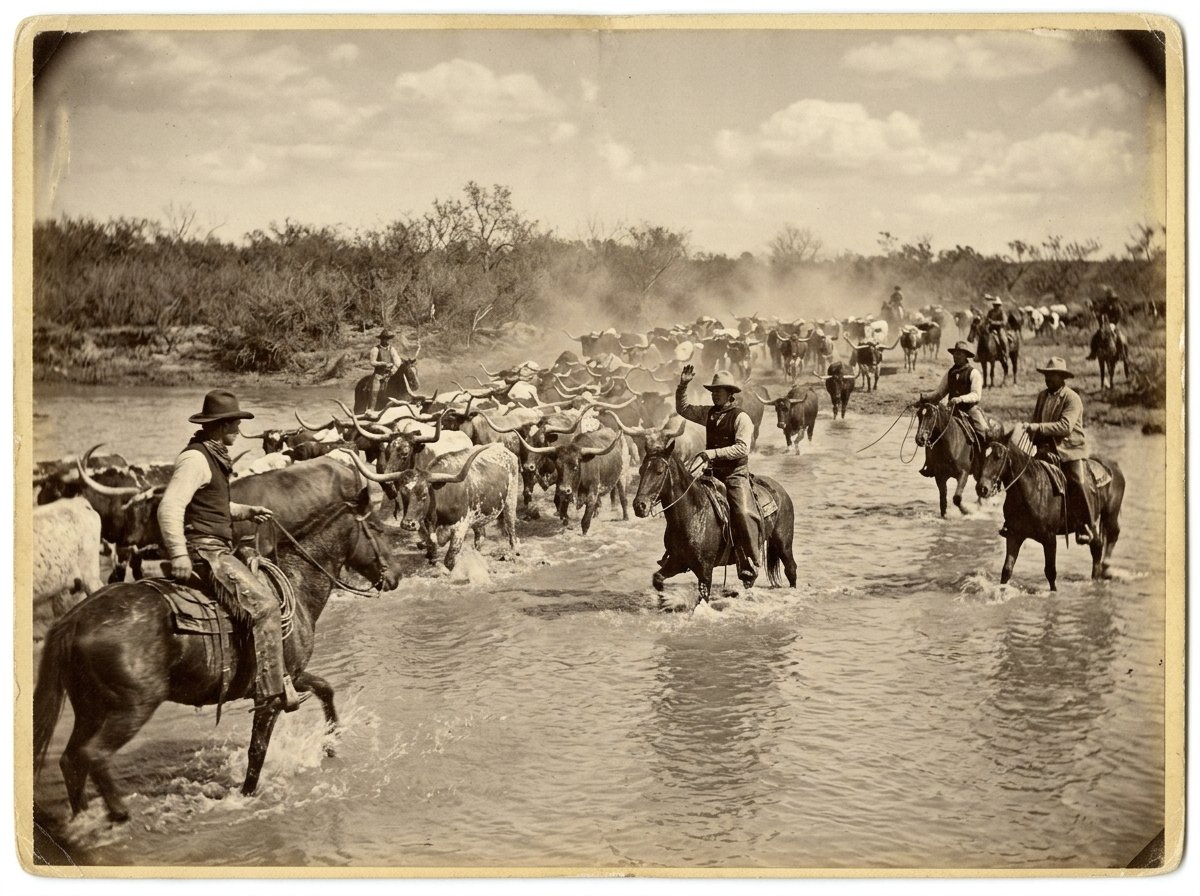
📜 Frontier Fast Facts: The Oregon Trail
Route Length: Roughly 2,170 miles from Independence, Missouri, to Oregon City in the Willamette Valley.
Peak Migration Years: 1841 to 1869 (Over 400,000 pioneers, settlers, ranchers, and gold-seekers journeyed west).
Primary Mortality Cause: Waterborne diseases (primarily Asiatic cholera along the Platte River), accidental firearm discharges, and river drownings.
Essential Vehicle: The farm wagon (prairie schooner), drawn by teams of four to six oxen rather than horses or mules.
Between the early 1840s and the completion of the transcontinental railroad in 1869, more than 400,000 men, women, and children packed their worldly possessions into canvas-topped farm wagons and embarked on an epic 2,000-mile pilgrimage across uncharted prairie and towering mountain ranges. This legendary highway of grit and determination was known as the Oregon Trail. Its deep wagon ruts, still carved indelibly into the sandstone bluffs of Wyoming and Nebraska today, serve as a solemn monument to the pioneer spirit that forged the American nation.
The Great Departure: Independence and the Spring Countdown
The journey along the Oregon Trail was governed by strict seasonal arithmetic. Wagon companies assembled at frontier “jumping-off” towns along the Missouri River — Independence, St. Joseph, and Westport — throughout April. Timing was a matter of life and death: depart too early, and the prairie grasses would be too immature to feed draft livestock; depart too late, and the company risked being trapped by ferocious autumn blizzards in the high passes of the Rocky or Cascade Mountains.
Contrary to modern film mythology, the standard vehicle of migration was not the colossal Conestoga freight wagon, but the smaller, maneuverable Prairie Schooner. Built of seasoned hardwood and bowed with hickory hoops supporting double-layered cotton canvas, these wagons rarely carried passengers. Every pound of interior space was reserved for survival rations: 200 pounds of flour, 150 pounds of salt bacon, 50 pounds of sugar, and 20 pounds of coffee per adult, along with cast-iron cookware, dry beans, and spare axle grease.
Why Oxen Reigned Supreme on the Overland Trail
While horses and mules occupied the popular imagination of the West, the true heroes of the Oregon Trail were four-legged draft oxen. Experienced trail captains strongly urged emigrants to purchase oxen for three decisive reasons:
- Steady Temperament: Oxen possessed calm endurance, rarely panicked during torrential prairie thunderstorms, and were far less likely to be stampeded than easily spooked mules.
- Dietary Resilience: Oxen thrived on coarse prairie bunchgrass and alkali waters that would incapacitate fine-bred horses.
- Economical Security: If an ox fell lame or died of exhaustion, its hide, tallow, and meat could be salvaged by the wagon company to sustain the family.
The Silent Killer: Cholera on the Platte River
Hollywood narratives often depicted hostile Native American attacks as the supreme danger of the trail. In truth, historical trail registers and territorial burial logs prove that violent skirmishes accounted for fewer than 4% of total pioneer fatalities. The overwhelming threat along the trail was microscopic: waterborne infectious disease, led by the catastrophic scourge of Asiatic cholera.
As thousands of emigrants followed the sluggish, shallow waters of the Platte River across modern-day Nebraska, primitive sanitation contaminated communal water sources. Cholera struck with terrifying suddenness; healthy pioneers waking up at dawn could succumb to severe dehydration and die by sunset. An estimated 20,000 to 30,000 emigrants were buried in unmarked graves along the trail — representing an average of ten graves for every single mile from Missouri to Oregon.
Landmarks of Hope: Chimney Rock to South Pass
Navigating the boundless expanse of the Great Plains required visual anchors. Emigrants measured their progress against striking natural monuments:
- Courthouse Rock & Chimney Rock: Towering limestone needles rising hundreds of feet above the North Platte valley in western Nebraska, signaling that the plains were yielding to the foothills.
- Fort Laramie: The vital military hub in Wyoming where emigrants mailed letters home, repaired iron wagon rims, and purchased essential supplies.
- Independence Rock: The famous “Register of the Desert,” a granite monolith where travelers carved their names in axle grease and stone. Pioneers aimed to reach this landmark by the Fourth of July to ensure safe passage before early snowfall.
- South Pass: The gentle 20-mile-wide saddle in the Wind River Range that allowed wagons to cross the Continental Divide without scaling sheer mountain peaks.
The Descending Peril: The Snake River and Blue Mountains
Crossing the Continental Divide brought no immediate respite. The second half of the trek proved physically grueling as wagons traversed the suffocating, sagebrush-covered volcanic plains of Idaho’s Snake River. At Barlow Road or the treacherous Columbia River gorge, exhausted pioneers faced their final, terrifying tests: lowering heavy wagons down sheer mountain ledges using wrapped ropes around pine trees, or rafting down raging river cataracts to reach the lush agricultural paradise of the Willamette Valley.
The Immortal Legacy of Overland Pioneers
The pioneers who walked barefoot alongside their oxen across 2,000 miles of wilderness did more than settle Oregon and California; they redrew the geopolitical map of North America. Their grit, documented in hundreds of yellowed trail diaries preserved in national archives, continues to inspire readers as the pinnacle of human perseverance against impossible odds.
Historical Provenance & Archival Standards
Wild West Stories Historical Research Division • Primary Source Cross-Referenced
This historical monograph is compiled from digitized records preserved at the National Archives and Records Administration (NARA), the Library of Congress Prints and Photographs Division, and Western state historical registries. All dates, geographic coordinates, and legal proceedings have been verified against original 19th-century newspaper archives and territorial government registries.