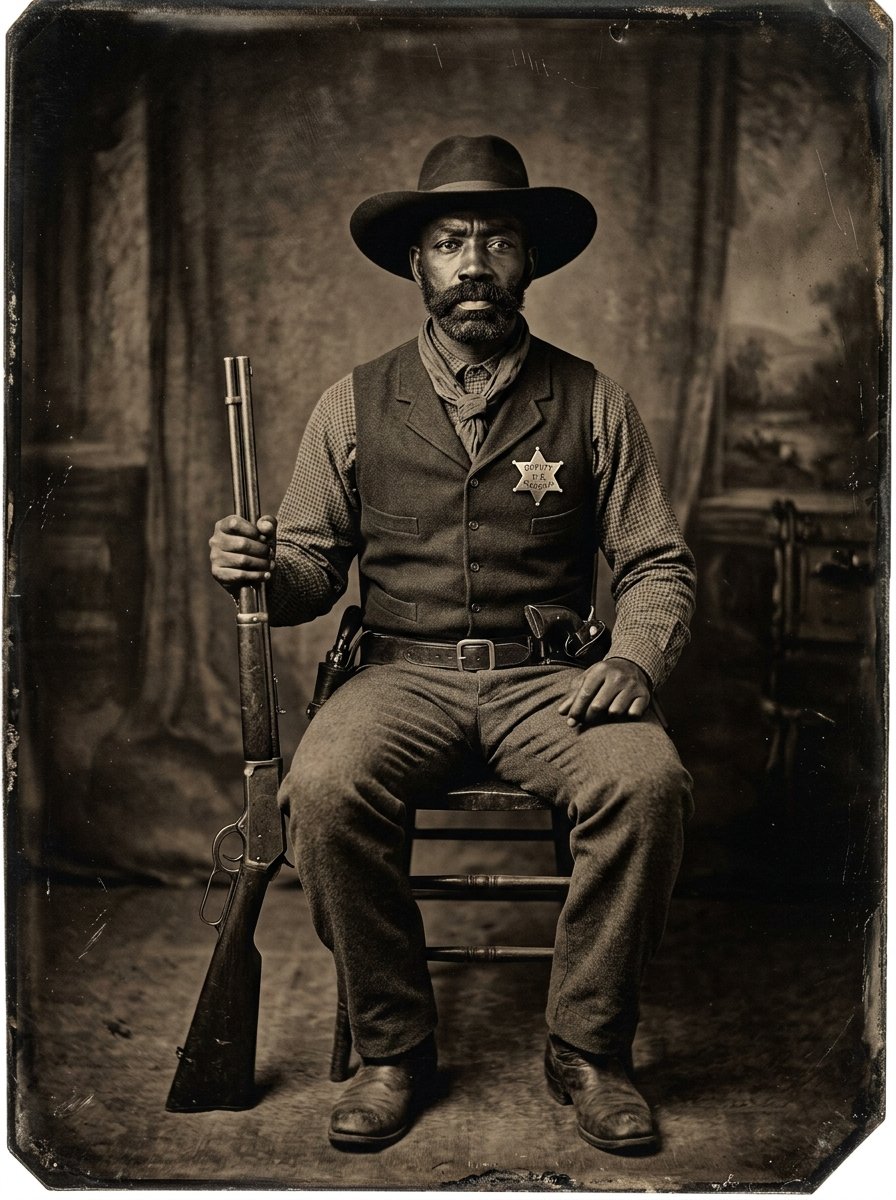
📜 Frontier Fast Facts: The Buffalo Soldiers
Legislative Origin: Congressional Reorganization Act of July 28, 1866 (Forming the 9th and 10th Cavalry, and 24th and 25th Infantry Regiments).
Frontier Deployments: Trans-Mississippi West, Fort Davis, Fort Huachuca, Fort Sill, and Big Bend Country across Texas, New Mexico, Arizona, and Montana.
Decorations of Honor: 18 Medals of Honor awarded to Buffalo Soldiers during the Western frontier campaigns for extraordinary heroism under fire.
Enduring Legacy: First national park rangers protecting Yosemite and Sequoia; pioneered thousands of miles of military roads and telegraph lines.
In the aftermath of the American Civil War, Congress enacted landmark legislation that forever transformed frontier military history: the formation of six all-Black peacetime regiments in the United States Regular Army. Consolidated in 1869 into the 9th and 10th U.S. Cavalry and the 24th and 25th U.S. Infantry, these elite units earned the revered title Buffalo Soldiers. Dispatched to the most unforgiving postings of the American frontier, they faced extreme desert heat, sub-zero mountain winters, rampant racial prejudice, and rugged terrain to protect expanding homestead settlements and safeguard continental migration routes.
Origins and the 1866 Army Reorganization Act
During the Civil War, more than 180,000 African American soldiers fought courageously in the United States Colored Troops (USCT). Recognizing their tactical discipline and sacrifice, Congress passed the Reorganization Act on July 28, 1866, officially establishing Black regular army units. Men rushed to enlist from across the war-torn South and Midwest, viewing military service as a vital vehicle for legal citizenship, honorable wages ($13 a month), educational literacy, and dignity in a nation deeply divided by post-war Reconstruction.
Official records from the National Archives illustrate the immense hurdles these soldiers overcame from day one. Frontier supply depots frequently issued them cast-off rations, substandard uniforms, and diseased cavalry mounts. Despite institutional neglect, the 9th and 10th Cavalry regiments quickly recorded the lowest desertion rates and highest retention numbers in the entire frontier army.
The Meaning Behind the “Buffalo Soldier” Moniker
The exact origin of the name remains rooted in frontier respect and legendary Plains lore. According to oral histories recorded among the Cheyenne, Apache, and Comanche tribes in the 1870s, Indigenous warriors drew a comparison between the soldiers’ resilient, tightly coiled hair and the sacred bison’s dense fleece. More importantly, tribal scouts revered the fierce, tenacious fighting spirit of these troopers, who, like the wounded prairie buffalo, fought relentlessly to the very end. Rather than an epithet, the soldiers embraced the title with immense pride, formally integrating the American bison into the official regimental crest of the 10th Cavalry.
Tactical Operations: The Indian Wars & Border Defense
From 1867 through the 1890s, Buffalo Soldiers conducted grueling patrols spanning the southwestern deserts to the high northern plains. Under commanders such as Colonel Edward Hatch and Colonel Benjamin Grierson, the units played pivotal roles in major frontier campaigns:
- The Apache Campaigns (1877–1886): Operating out of dusty adobe garrisons like Fort Bayard and Fort Apache, cavalrymen tracked elusive warriors across jagged desert ranges and through perilous canyons, demonstrating peerless endurance in waterless wastes.
- Protecting the San Antonio-El Paso Mail Road: Buffalo Soldiers secured hundreds of miles of remote stage routes, escorting postal carriers and emigrant trains through Comanche and Kiowa territories.
- Engineering Frontier Infrastructure: Beyond combat, soldiers surveyed unmapped wilderness, laid hundreds of miles of military telegraph wire, constructed garrison buildings, and escorted railway survey engineers through uncharted canyons.
Unmatched Heroism: The Congressional Medal of Honor
Between 1870 and 1898, eighteen Buffalo Soldiers were awarded the nation’s highest military decoration for gallantry in action. Among the most legendary was Sergeant Emanuel Stance of the 9th Cavalry, who became the first Black regular to receive the Medal of Honor in 1870 for charging an overwhelming hostile force to rescue abducted settler children near Kickapoo Springs, Texas.
Another celebrated hero, Sergeant George Jordan, repulsed a numerically superior force at Carrizo Canyon, New Mexico, in 1881, stubborn in holding an isolated redoubt until relief arrived. These accounts, meticulously cataloged in territorial court records and War Department dockets, demonstrated an unwavering devotion to duty in the face of grave danger.
Guardians of Early American National Parks
As the frontier era waned in the late 1890s and early 1900s, the Buffalo Soldiers took on an innovative civilian mission: acting as America’s very first national park rangers. Stationed at the Presidio of San Francisco, companies of the 9th Cavalry and 24th Infantry rode into Yosemite, Sequoia, and General Grant National Parks. Troopers constructed the first wagon roads into the Giant Forest, evicted illegal poachers and timber syndicates, extinguished prairie wildfires, and preserved America’s natural heritage for future generations.
The Lasting Frontier Legacy
The Buffalo Soldiers conquered not only the physical hardships of the American frontier but also the societal prejudices of their era. Their disciplined professionalism, unmatched horsemanship, and sacrifice laid an unshakeable foundation for the modern integrated military and cemented their rightful place in the pantheon of authentic Western pioneers.
Historical Provenance & Archival Standards
Wild West Stories Historical Research Division • Primary Source Cross-Referenced
This historical monograph is compiled from digitized records preserved at the National Archives and Records Administration (NARA), the Library of Congress Prints and Photographs Division, and Western state historical registries. All dates, geographic coordinates, and legal proceedings have been verified against original 19th-century newspaper archives and territorial government registries.