The Weight of the Mountain Man’s Promise
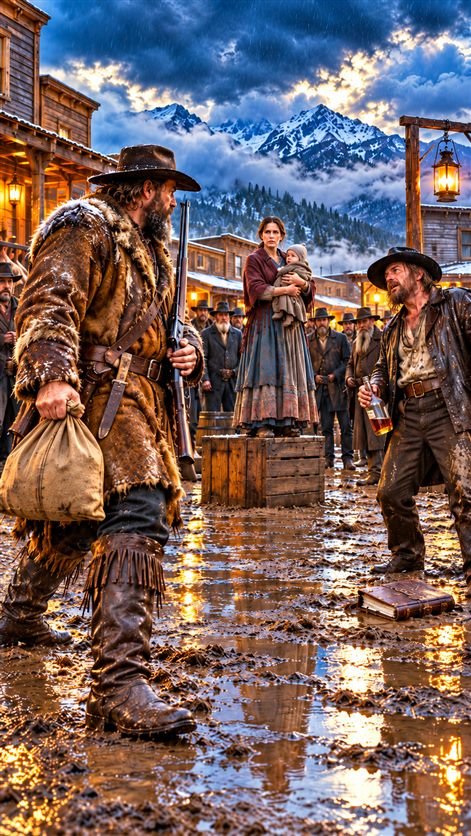
The rusted buckle of the debt ledger bit into Roy’s palm as the freezing November rain slicked the hair across his forehead, but the stinging cold did nothing to sober the grease-soaked malice in his eyes. “Twenty-five dollars, right here on the barrel head,” Jeb spat, his tobacco-stained teeth flashing in the gray Misery Bend gloom as his gaze crawled over Maeve’s broad frame with the predatory leer of a cur eyeing a lame sheep. Maeve stood frozen on the frost-whitened timber crate, the raw weight of six-month-old Henry pressed so hard against her ribs that she could feel the frantic, fluttering drumbeat of the infant's heart through their damp clothes. The icy wind sliced straight through her faded cotton dress, tightening the fabric over her full waist and heavy hips, but it was the jeers of the local men—the chuckles, the crude wagers on …
The Bitterroot Line and the Frost

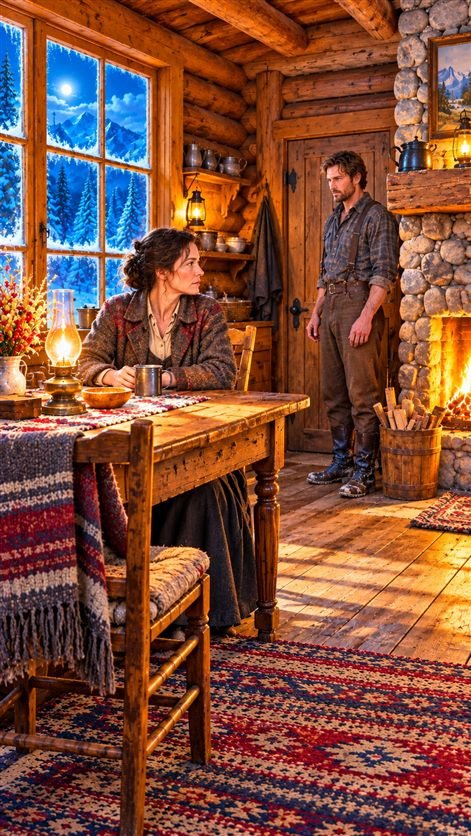
The heavy galvanized wire hissed through Lavinia Sinclair’s gloved palms before settling into the notched juniper post with a sharp, iron-cold ring. She did not pin the lever; instead, she let the spool recoil three inches into the snow, leaving the bottom strand slack enough for a doe and her fawn to slip beneath without tearing their flanks. It was an unorthodox way to fence a mountain pasture, and Asa Cutler would have something dry and pointed to say about it before the kettle boiled for midday. "You've left a gap wide enough for a stray steer to trot through, Sinclair," Cutler said, not from behind her on the ridge where she expected him, but up from the creek trail where his roan gelding had made no more sound than a shadow moving over moss. Lavinia straightened her back, pressing a mittened hand against the …

The Parlor Keys and the North Wind

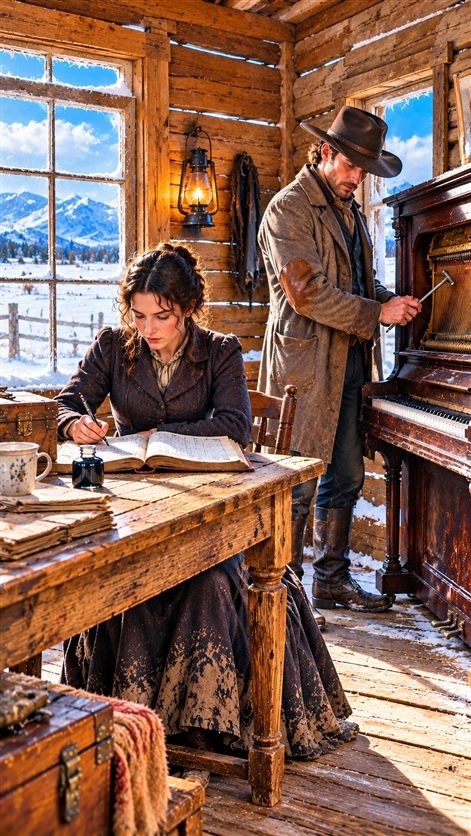
"The strings will settle once the fire catches, Miss Hayes, but you cannot tune out a draft that comes straight off the Sweetwater divide." Lucy Whitaker taps a tuning hammer against an unyielding copper-wrapped bass string, making the aged rosewood cabinet hum with a dry, metallic resonance that matches the weather outside. Lillian Hayes does not look up from her ledger—not because she is retreating into a stock heroine's silent standoff, but because her ink is freezing in its horn bottle and she must finish entering the carriage-repair tallies before the tallow dip gutters out. "The draft stays where it is, Mr. Whitaker, because the floor joists are anchored in frozen gravel and no amount of your hammer-work will persuade timber to swell until May." Her voice is crisp, carrying the precise articulation of someone who spent her nineteenth year teaching grammar in an unheated …

The Salt and the Sluice

"If we are to boil salt pork in the same kettle with my boots, Julian, you might at least wait until I have finished starching the carrier's collars," Ruth said, her fingers blue-red with the morning damp as she pinned a damp linen strip to the rough cedar doorframe. Julian Fletcher did not drop his eyes from the tallow candle he was scraping over the greased wooden axle-tree; instead, he laughed—a short, barking sound that rattled the tin mugs hanging from the stagehouse rafters—and suggested that a bit of pork grease in the laundry only proved a man's shirts had come from an honest kitchen. The frost of December 1884 lay thick and white over the Puget Sound mudflats, stiffening the marsh grass into brittle quills that snapped whenever the mail hack trundled out toward the timber railhead at Port Madison. Inside the low-ceilinged stage …

The Salt Marsh Gate

"We should have turned back at the salt-marsh gate," I told him, though the cedar grease on my mittens made it impossible to grip the reins properly anyway. The sudden, heavy silence that followed my confession settled over the wagon box like wet wool, proving instantly that Levi Cutler never let a poorly chosen remark pass without a deliberate, maddening calculation of its cost. Part 1 The salt-marsh gate had been nothing more than two peeled cedar posts and a rusted iron hinge swinging against the gray drizzle of a December morning in the Puget Sound country, but passing it meant I had traded the four walls of my uncle’s smokehouse at Union City for twenty miles of corduroy road that smelled exclusively of rotting hemlock and wet horse. My name is Adelheid Albright, and by the reckoning of the church elders in Port Gamble …

The White River Gazette

"A town that forgets its own dialect will soon be reading its own obituary." *The sentence sat wet in the galley, and Esther Olsen refused to scrape it out despite the printer's thumbprint smudged across the margin.* * The ink in the roller was always too cold before the stove found its rhythm, smelling of linseed oil and charred walnut hulls that settled in the grain of the floorboards like wood-smoke dust. Esther did not look up when the latch lifted—not because she was guarding her columns from a prying eye, but because the cold air that fell through the door always made the damp news-sheets curl against the tympan. "The frost has caught the late marrow squash," Elijah Gibson said, closing the door with his hip while he balanced a crate of tallow candles. "And the stage from Forsyth isn't coming up the bluff …

The Seed-Frames and the Frost

"If we plant the early Dutch reds before the quarter moon, the frost will take them just as sure as Sunday," Willa Fletcher said, her voice dropping into the quiet well of the cellar before she realized she had spoken aloud. Anthony Mercer did not look up from the wheel hub he was greasing with mutton tallow. He sat on an inverted salt barrel in the dim lean-to behind the river-bottom smokehouse, his shirtsleeves rolled to show forearms mapped with grease and pale sun-bleached hair. "The almanac says nothing about a moon, Willa. It talks about the bottomland damp." "The almanac was printed in St. Louis for people who think the world stops at the Missouri," she murmured, retreating two steps toward the cold-frame sash she had been scrubbing with lye water. Willa was twenty-eight, shaped by three summers of hauling river-silt in lard buckets …

Forging the Bitterroot Ledger

Why would a blacksmith’s daughter forge her own exile in the high canyon? Because the iron shackles she carried were made of a broken promise no winter could melt. Lavinia Sterling stood in the freezing draft of the Sutherland mill house, her knuckles blackened with coal dust and tallow, watching the iron tire heater hiss against the first wet snow of November. Just forty-eight hours remained on the county tax lien before the entire valley’s irrigation rights—and her late father’s stone-cut smithy—passed entirely into the hands of the Rutledge syndicate. Outside in the howling Utah gorge, the grey waters of the Weber River rushed against the timber pilings with the sullen roar of a freight train, whipped into foam by the freezing gale. Lavinia did not look up when the heavy oak door creaked open, admitting a blast of stinging sleet and the tall, stooped …

Ink and Iron Pass

Why did you leave the valley when the ink was barely dry? Because a forged letter told me you had traded my name for a bribe, and the freezing mountain pass left no room to look back. The cracking report of heavy pine logs buckling under an unseasonal Sierra blizzard echoed across the stagecoach yard, carrying the sharp scent of singed horsehair and frozen tallow. Inside the limestone-faced way station, sleet rattled against the iron-shuttered glass like scattered gravel thrown by an angry hand. Adelheid Fontaine pressed her palms flat against the scarred walnut top of the reception counter, feeling the steady, brutal vibration of the wind outside. Seven years had passed since she had last breathed the thin, pine-scented air of the California foothills, and seven years since Ransom Driscoll had looked at her with eyes hardened by a lie she never knew how …

The Limestone Ledger

Why did the apple blossoms wither before the autumn frost touched the limestone gorge? They died because the poisoned hives carried a secret as old as the county line. Genevieve Albright dragged her mud-caked hem through the swirling sleet of the Texas Hill Country, her fingers numb inside her woolen mittens as she guided a limping, draft-weary mule toward the flickering amber glow of the stone ranch house. The October wind shrieked down the limestone bluffs, carrying the acrid, metallic tang of an approaching prairie fire from the dry pastures to the west, mixing with the sharp scent of damp earth and rotting cedar. She had walked three miles through the freezing downpour after her buckboard axle snapped near the dry creek bed, her lungs burning with every breath of the sub-zero gale. When she finally reached the heavy oak porch of the Callahan homestead, …