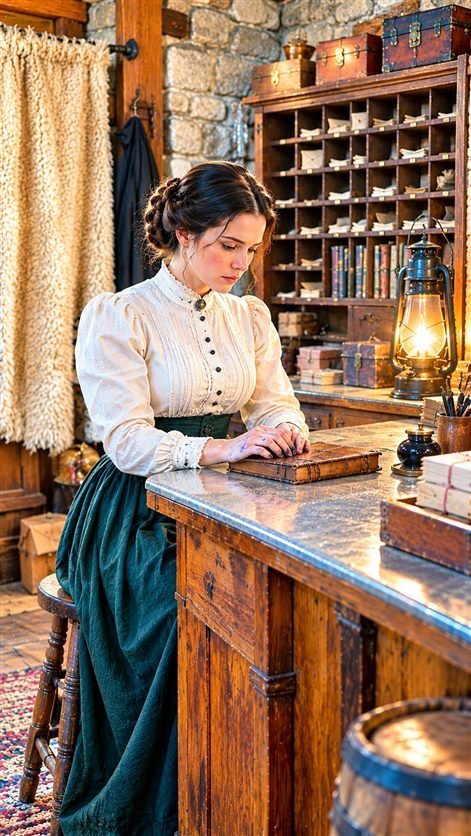
The Last Trail Home

The blade of the wind sliced down the granite gorge of the Cascade Mountains, leaving behind a frozen wasteland where only the dead could find rest. Evelyn Hart opened her eyes to a world painted entirely in white, her breath crystallizing instantly in the merciless air as the final, desperate plea slipped past her frozen lips. * The mountain did not take Evelyn Hart by accident. Someone had decided she was the one person they could leave behind in this frozen hell, trading her life for an extra ration of flour and a slightly lighter load on the straining axles of the timber wagon. The cold truth had crystallized in her chest the exact moment she stepped out from the dense pine timber carrying an armful of damp birch wood and saw the empty clearing. The iron-rimmed wagon was gone. The weary mule was gone. …

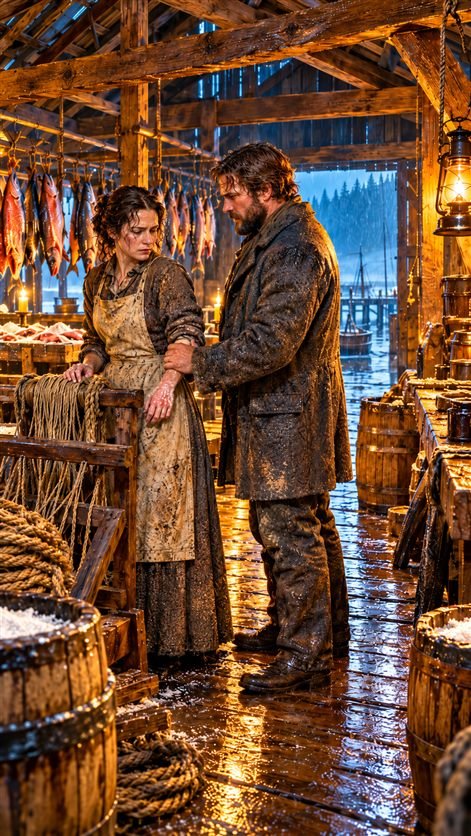
The Iron Ring and the Well-Spring

The alkali dust did not settle until past sundown, settling over the wagon tongue like gray flour. "If the ash-wood dries another line, Cutler, the felloes will snap before we reach the Smoky Hill siding," Cordelia said. The sun beat down upon the dry Kansas trail with relentless fury, turning the landscape into a baked palette of ochre and dust. Cordelia Brandt wiped her grease-stained hands upon her apron, leaving a dark smudge across her cheek. Beside her, six-year-old Clara clutched a smooth river stone, her small face pinched with the stubborn fatigue of children who had walked too many miles behind a swaying tailboard. At the edge of the clearing stood Bram Cutler’s sawmill, its water-wheel silent and choked by the dwindling creek bed. Bram did not look up from the iron tire he was cooling in a wooden tub; his compact, stocky frame …

The Salt-Cure Ledger

Mabel Baldwin did not care for salt fish, but she understood the gray film it left on the pine floorboards of the Puget Sound curing sheds better than anyone between Port Gamble and the sandspit at Dungeness. When the tide came rushing in off Hood Canal, smelling of rotting kelp and cold iron, the wet brine worked its way up through her boot soles until her stockings felt like frozen seaweed. She sat on an upturned nail keg by the door, scraping the scales off her thumbs with a dull horn knife, watching the rain grease the surface of the pilings where the steam scows tied up. Across the narrow gap of salt-water, Thomas Mason was wrestling a five-hundred-pound spool of tarred hemp line onto a flatbed dray, his shoulders hitched beneath a gray wool coat that had seen three winters of saltwater spray and …

The Dry Shelf of Sycamore Creek

The limestone benches of the Pedernales country held water like a broken crock, keeping its secrets deep below the cedar-brakes where a mule could founder on dry flint before smelling a drop. Dorothea Zimmerman did not look up from the small tin kettle she was scouring with coarse river sand, though the heavy iron-tired rumble of Asa Cutler’s six-mule freight wagon had been shaking the scrub-oak roots for ten minutes. She had promised seven-year-old Toby that they would boil wild plums before the light failed, and she meant to keep that promise even if every freight contractor between Austin and Fredericksburg chose to haul his dry axles past her stone cistern. "You're boiling grit into that mash, ma'am," a man's voice called out from the trail-side cedar. It was a light, sliding sort of voice that didn't belong to a man who had just spent …

The Ledger of Salt Creek

"It is not a matter of what the ink says upon the ruled lines, Mr. Lancaster, but of whether the flour will keep dry while the rain holds off," Nellie Weaver said, her fingers stained blue-black with iron-gall ink as she closed the calfskin ledger. She did not wait for his answer, knowing well that the silence between them was forged of limestone dust and stubborn arithmetic. The roof of the Blanco River millhouse rattled under a thin, scudding mist that smelled of cedar smoke and wet shale. Autumn of 1876 in the Texas Hill Country came not with a gentle drop in temperature, but with sudden squalls that whipped down from the Edwards Plateau, turning the dry creek beds into churning red-brown arroyos within the hour. Nellie had walked three miles from the bottom-land settlement that morning, carrying a wicker basket packed with twenty-four …

The Cedar Ledger

"A cedar bolt is only as honest as the river that carried it down," Edwin Redfield said, not looking up from the damp bill of lading spread across the salt-bleached sorting table. Clara Bennett did not drop her pencil, though the lead was soft and prone to snapping when the sea mist swelled the paper. She had not come down to the Port Gamble tidewater dock at six in the morning to discuss forestry ethics with a millwright who had three ink-stained fingers and a habit of treating every column of figures as a personal insult to his engineering. "The river has nothing to do with why the territorial timber inspector recorded four hundred cords of shingle stock where the barge only drafts for three hundred and fifty," she said, her voice carrying that quiet, deliberate flatness that usually made her younger brother’s dog lie …

The Weight of Salt and Sorghum

The salt-crock had been chipped at the rim since the spring of eighty-six, when Ruby Thornton’s younger brother dropped it while hauling water from the Cimarron bottoms. Ruby had mended the fracture herself with a paste of egg white and quicklime, binding it round with dampened sailcloth until the bond took like flint. Now, in the gray, damp chill of an October dawn that smelled of wet bluestem and wood smoke, she used the edge of an iron spoon to tap three ounces of lard from its center. "The flour's too fine this season," she murmured. The brindle mule, Juniper, tied to the corner of the lath-and-plaster buttery, shifted her bulk and let out a dry, rattling sigh that shook the loose cedar shingles overhead. "Hush yourself," Ruby said without looking up. "You’ve had two ears of yellow corn and three gallons of well-water, which …

The Ink-Stained Ledger of Canyon Creek

The salt pork was frozen so hard that Susannah Sutherland had to score it with a draw-knife before she could drop it into the iron pot. Across the narrow room of the assay office—rented for four dollars a month from a mining company that had gone bankrupt during the Grant administration—Alexander Marshall was scraping dried pitch off his palms with a piece of pumice. Neither of them spoke of the three wagonloads of hemlock shingles standing out in the sleet behind the livery, nor of the letter from the Territorial Land Registrar that sat propped against the salt-cellar like a small, white gravestone. "It's going to crust over by dark," Marshall said. His voice was lower than the wind off the Black Hills rim, though the room was small enough that a whisper usually sufficed. He didn't look up from his hands; he was rubbing …

The Stone Spring Ledger

The ink on the county registrar’s duplicate had dried three days before Maude Zimmerman ever saw the cedar brakes of the Pedernales, and she had spent every mile of the stage journey from Round Rock wondering if the clerk’s nib had slipped when he copied her middle initial. "It did not slip," Maude said aloud to the empty mule-hitch behind the dry-goods store, her voice dropping into the limestone dust before the breeze could take it. She was twenty-nine years old, weighed down by a trunk of grey bombazine that smelled faintly of camphor and unfulfilled expectations, and she was standing precisely where Justin Langford’s second cousin had promised she would not be—namely, four hundred miles away from the man who had signed his letters *Your affectionate intended, Arthur.* The man coming down the limestone ridge now, leading a roan mule laden with split cedar …

The Iron-Bound Ledger

"If a man insists on driving a spring-wagon over limestone ruts with the springs locked tight, he deserves every jar that rattles his teeth out." Clementine did not look up from the damp ink-roller she was cleaning with a scrap of flannel. She spoke into the dim limestone gloom of the post-substation, knowing perfectly well that Thaddeus Lancaster was not listening to her advice about carriage springs any more than he had listened to her warnings about the spring rains swelling Onion Creek. Lancaster stood by the tall, iron-framed envelope rack with a sheaf of waybills in his hand, his coat smelling faintly of dry wheat chaff and printer’s ink—the permanent scent of a man who spent his days weighing grain sacks and reckoning freight tariffs for the Texas Central rail spur. The town of Blanco was small enough that everyone knew the weight of …