The Weight of the Mountain Man’s Promise
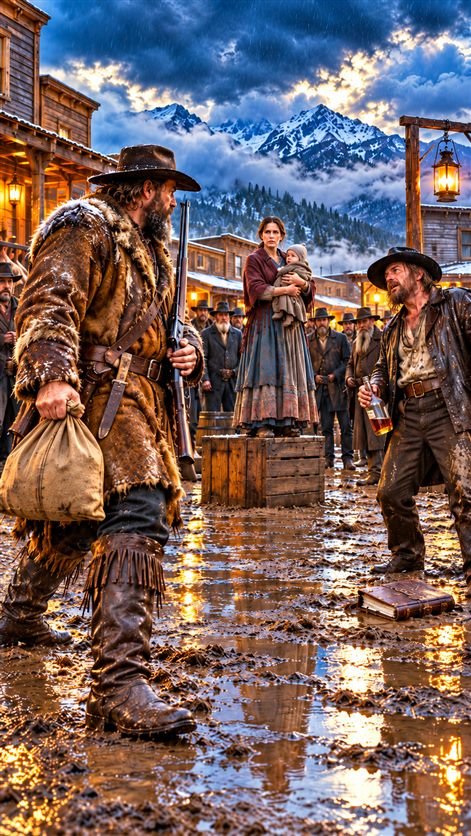
The rusted buckle of the debt ledger bit into Roy’s palm as the freezing November rain slicked the hair across his forehead, but the stinging cold did nothing to sober the grease-soaked malice in his eyes. “Twenty-five dollars, right here on the barrel head,” Jeb spat, his tobacco-stained teeth flashing in the gray Misery Bend gloom as his gaze crawled over Maeve’s broad frame with the predatory leer of a cur eyeing a lame sheep. Maeve stood frozen on the frost-whitened timber crate, the raw weight of six-month-old Henry pressed so hard against her ribs that she could feel the frantic, fluttering drumbeat of the infant's heart through their damp clothes. The icy wind sliced straight through her faded cotton dress, tightening the fabric over her full waist and heavy hips, but it was the jeers of the local men—the chuckles, the crude wagers on …

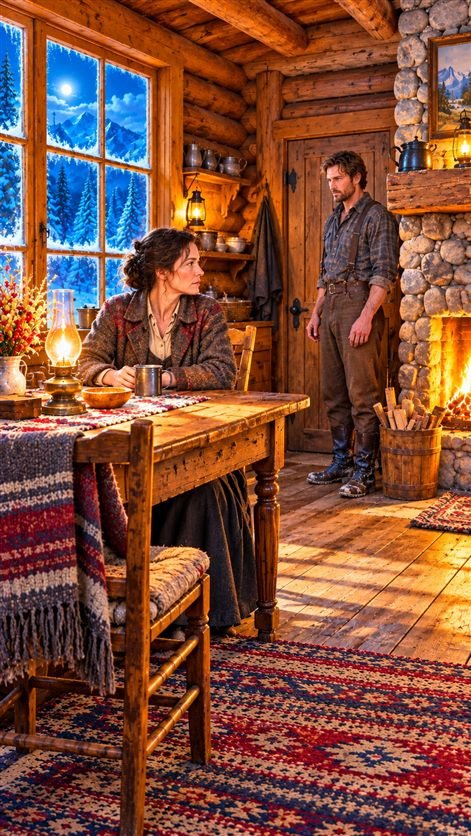
Tide Tables and Ledger Marks

"If a timber foot is missing from the tally, Mr. O'Connell, it is because the fir shrank in the salt damp, not because the clerk forgot her ink." "Wood does not shrink six tons to the cargo, Miss Jane, unless it's hauled by ghosts." * The salt air off Samish Bay carried the heavy, resinous reek of cedar-bark and the sharper, iron tang of the tidal flats at low ebb. On the wharf outside the Samish Shingle and Lumber Company’s main office, Mabel Jane did not look up immediately when the floorboards creaked under Alfred O'Connell’s long, narrow boots. She was twenty-seven, three inches taller than the standard Windsor chair allowed for comfortable posture, and currently engaged in the delicate task of scraping three-week-old fir gum from the nib of a steel-dip pen using the edge of a bone-handled ink eraser. Her dark wool skirt, …

The Bitterroot Line and the Frost

The heavy galvanized wire hissed through Lavinia Sinclair’s gloved palms before settling into the notched juniper post with a sharp, iron-cold ring. She did not pin the lever; instead, she let the spool recoil three inches into the snow, leaving the bottom strand slack enough for a doe and her fawn to slip beneath without tearing their flanks. It was an unorthodox way to fence a mountain pasture, and Asa Cutler would have something dry and pointed to say about it before the kettle boiled for midday. "You've left a gap wide enough for a stray steer to trot through, Sinclair," Cutler said, not from behind her on the ridge where she expected him, but up from the creek trail where his roan gelding had made no more sound than a shadow moving over moss. Lavinia straightened her back, pressing a mittened hand against the …

The Oil-Stained Bench

"If you shave an ounce off that belly hide, Donnelly, the first cedar log your team drags down the slip will snap the trace like twine." Nellie Scott did not look up from her scraping iron, though the smell of wet hemlock bark and neat's-foot oil told her exactly where the head blacksmith stood in the dim, sawdust-strewn mouth of the harness room. The salt wind off Hood Canal rattled the corrugated tin roofing above them, driving a fine, misting spray through the gaps where the cedar shakes had warped during the September blow. It was October of eighteen-eighty-four in Port Gamble, a town where the sound of the steam-driven band saws never truly died, vibrating even through the floorboards of the low-slung harness shop that clung to the pilings near the company wharf. Nellie’s thumbs were gray with tallow and salt, her apron stiffened …

The Parlor Keys and the North Wind

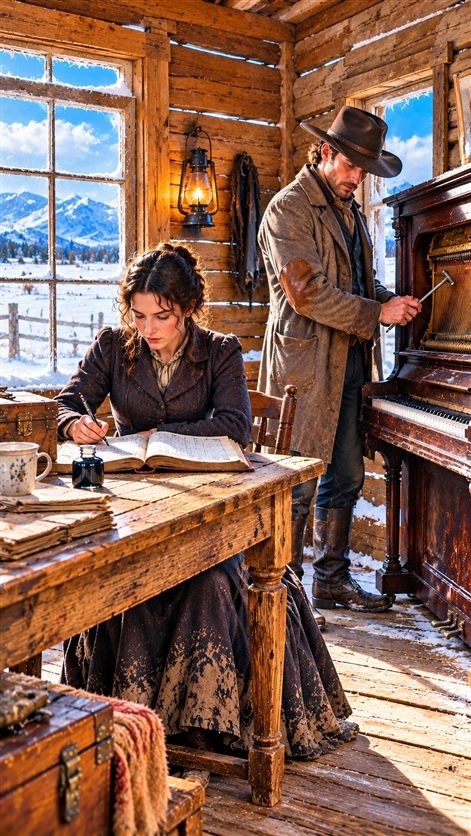
"The strings will settle once the fire catches, Miss Hayes, but you cannot tune out a draft that comes straight off the Sweetwater divide." Lucy Whitaker taps a tuning hammer against an unyielding copper-wrapped bass string, making the aged rosewood cabinet hum with a dry, metallic resonance that matches the weather outside. Lillian Hayes does not look up from her ledger—not because she is retreating into a stock heroine's silent standoff, but because her ink is freezing in its horn bottle and she must finish entering the carriage-repair tallies before the tallow dip gutters out. "The draft stays where it is, Mr. Whitaker, because the floor joists are anchored in frozen gravel and no amount of your hammer-work will persuade timber to swell until May." Her voice is crisp, carrying the precise articulation of someone who spent her nineteenth year teaching grammar in an unheated …

The Salt and the Sluice

"If we are to boil salt pork in the same kettle with my boots, Julian, you might at least wait until I have finished starching the carrier's collars," Ruth said, her fingers blue-red with the morning damp as she pinned a damp linen strip to the rough cedar doorframe. Julian Fletcher did not drop his eyes from the tallow candle he was scraping over the greased wooden axle-tree; instead, he laughed—a short, barking sound that rattled the tin mugs hanging from the stagehouse rafters—and suggested that a bit of pork grease in the laundry only proved a man's shirts had come from an honest kitchen. The frost of December 1884 lay thick and white over the Puget Sound mudflats, stiffening the marsh grass into brittle quills that snapped whenever the mail hack trundled out toward the timber railhead at Port Madison. Inside the low-ceilinged stage …

The Ink Beneath the Flooring

The cedar boxes on the wash-bench smelled of damp cedar and pressed mountain pennyroyal, a scent Lavinia Prescott had spent three hours cataloging before the midday mule train blocked the alley. She did not look up when the heavy boots creaked upon the dry willow boards of the porch, because she already knew from the rhythmic scrape of the left iron heel that it was the stone-mason Cutler, who walked as though every step were an arbitration between the earth and his own ankles. "If those roots are damp," Cutler said, without taking off his wool cap, "they will mildew before you reach the assay office, and then the botanical society in Denver will think Silverton sends nothing but swamp trash." Lavinia closed her lead pencil into the fold of her ledger and finally raised her chin, her heavy spectacles sliding an eighth of an …

Salt-Seam Granite

“There is no sense putting grease on a wedge that’s already swimming in bay water,” Caroline Bell said. She did not look up from the small earthenware crock she was scraping with a wooden spatula, though she knew George Reynolds had stopped his adze mid-stroke three paces away. The sound of the tool dying in the pine timber was flat—just the wet, heavy thud of cold steel against green cedar. The cook-shed smelled of woodsmoke, wet wool, and the sharp, vinegar tang of salt-risen dough souring in its crock by the iron stove. Outside, the Samish tide was turning, dragging grey-green weed across the mud flats and leaving the pilings of the timber pier sucking at the air with a wet, wet cough. It was late October of 1882, and the rain had settled into a steady, gray wool that seemed to have no beginning …

The Salt Marsh Gate

"We should have turned back at the salt-marsh gate," I told him, though the cedar grease on my mittens made it impossible to grip the reins properly anyway. The sudden, heavy silence that followed my confession settled over the wagon box like wet wool, proving instantly that Levi Cutler never let a poorly chosen remark pass without a deliberate, maddening calculation of its cost. Part 1 The salt-marsh gate had been nothing more than two peeled cedar posts and a rusted iron hinge swinging against the gray drizzle of a December morning in the Puget Sound country, but passing it meant I had traded the four walls of my uncle’s smokehouse at Union City for twenty miles of corduroy road that smelled exclusively of rotting hemlock and wet horse. My name is Adelheid Albright, and by the reckoning of the church elders in Port Gamble …

The Salt Water Well

"The salt will eat the brass before the vane turns twice," Louis said, without looking up from the leather washer he was paring with a small bone-handled knife. Opal did not answer him at once; she was kneeling in the damp fern-fronds by the creek mouth, smoothing a sheet of gray blotting paper over a damp maidenhair sample so the delicate veins would not curl as they dried. The tide was pushing cold Puget Sound water up the brackish mud-run, lifting the skiff against its cedar painter with a hollow, rhythmic *clonk* that matched the heavy throb of the steam sawmill across the narrow channel. Neither of them had mentioned the pump since Tuesday, when the wagon axle had snapped four miles up the logging track and left the heavy galvanized casing half-unloaded in the stinging nettles. "Brass is soft," she said finally, her voice …